
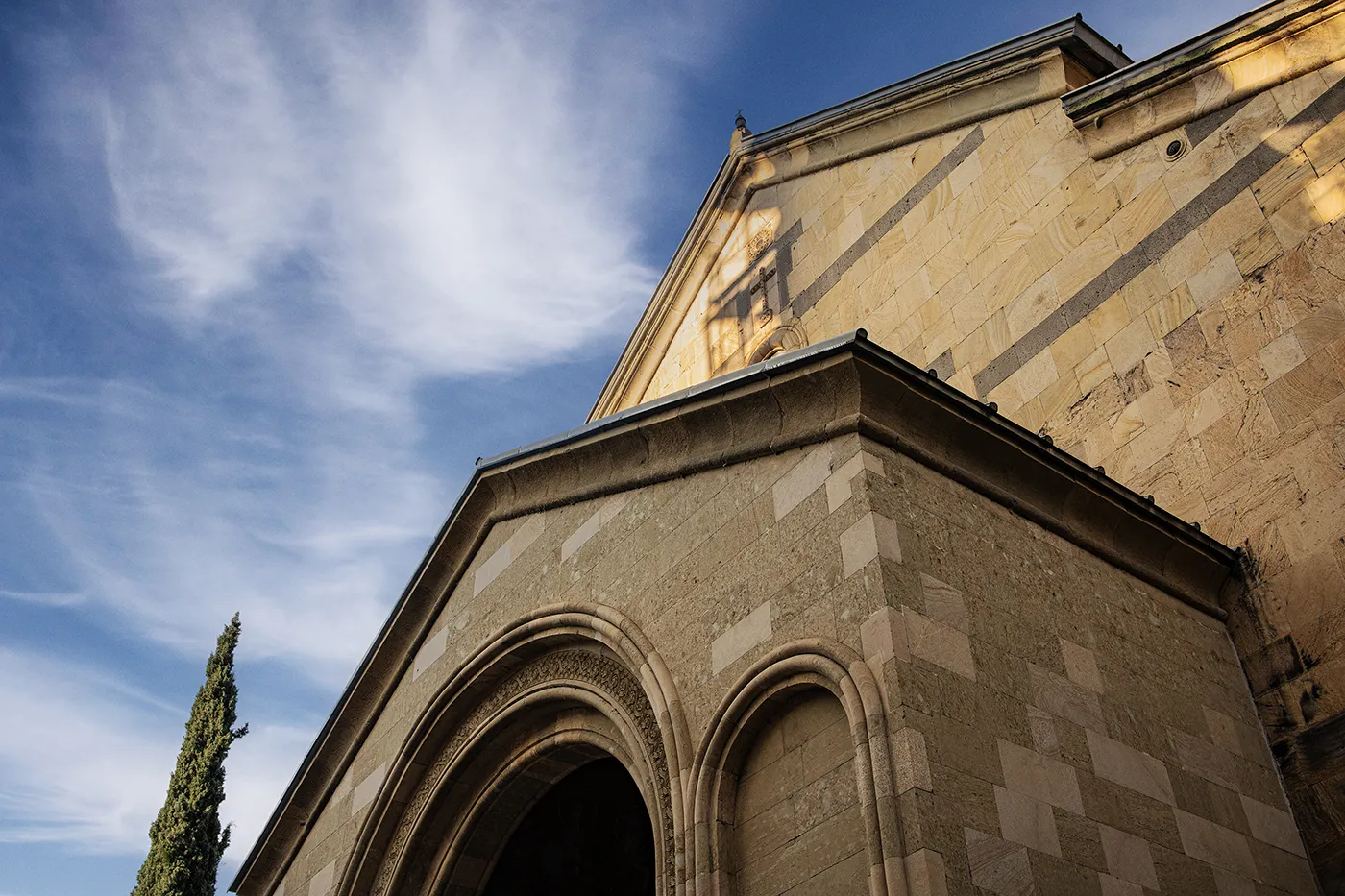
Sioni
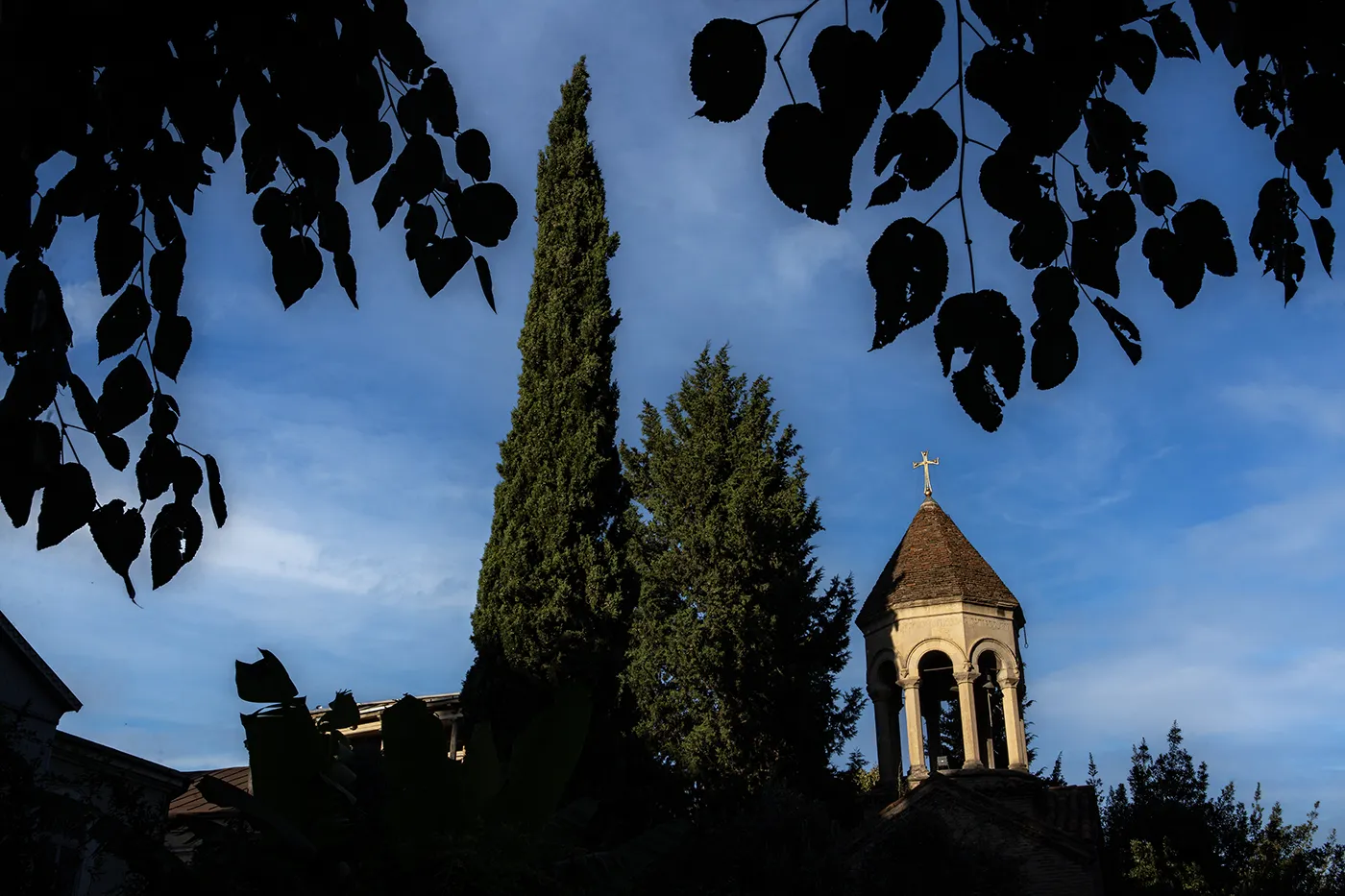
A cruciform church of the 6th-7th centuries
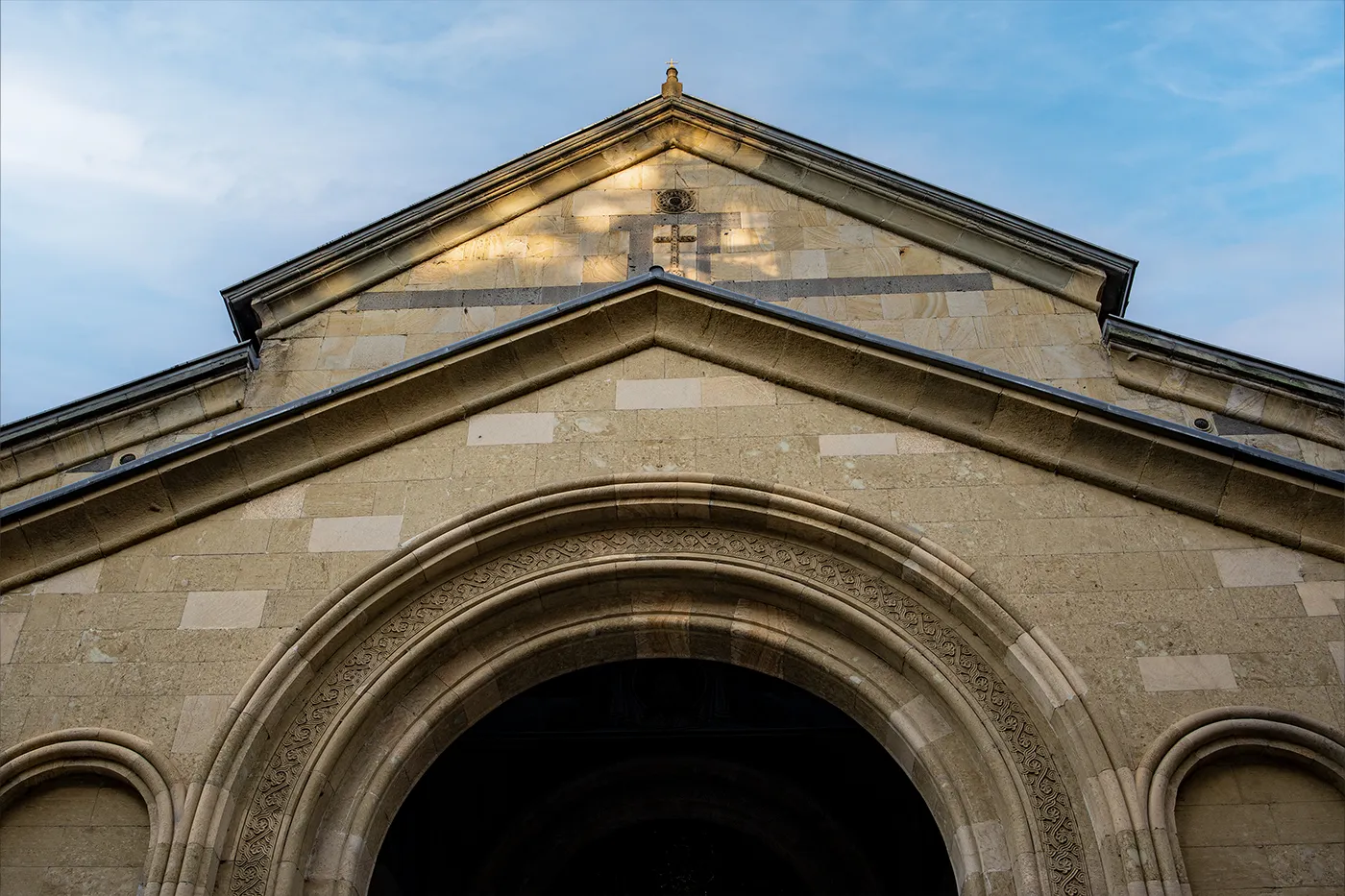
Sioni is thought to have been built under King Vakhtang Gorgasali, but was later changed by others. The church therefore has features belonging to its earliest blossoming, followed by a transitional period and ending with its current appearance. It is, more precisely, of the cross-in-square type.
As with the other churches of ancient Tiflis, the enemy always attacked Sioni. Unlike Svetitskhoveli, which so amazed the Seljuk sultan that he supposedly declared that ‘it should not been harmed’, the churches of Tiflis always suffered from the destruction of various enemies. The story of Sioni’s dome being destroyed so that Jalal al-Din could enjoy watching the massacre of Tiflis’s inhabitants from the comfort of his throne atop the church is known to all.
Less well-known is the fact that the father of our General, Colonel Kvinitadze, must have remembered this demolition of Tiflis, and this must be why the Khan of Khiva was dragged around by his beard after his capital of Khwarazm was taken (but this time by Russian weapons). Shah Abbas also robbed Sioni, and the cross of Saint Nino has repeatedly been hidden over the centuries. After ending up in Russia, it was returned to Sioni by Czar Alexander I after his conquest of Georgia. The Ottomans had earlier even wanted to turn Sioni into a mosque.
Agha Mohammad Khan Qajar put Sioni to the torch, burning it so badly that all its surviving frescoes were destroyed. But we remember this fire more than the one which consumed the elderly Taktakishvili, who was burnt alive in a house made of dried vine shoots after being accused of being a member of a plot against King Erekle. (His co-conspirator, the young Amilakhvari, simply had his nose cut off.)
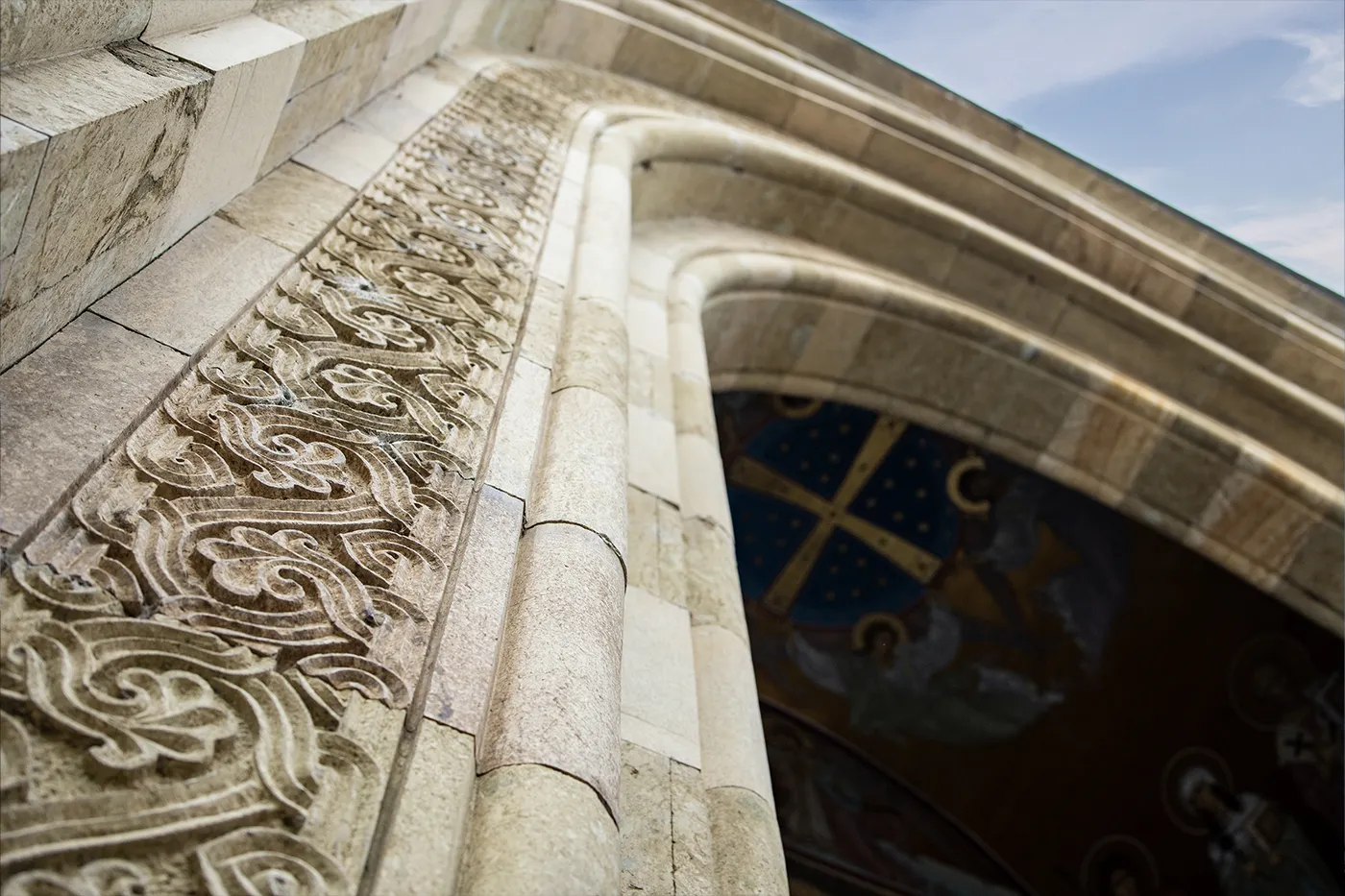
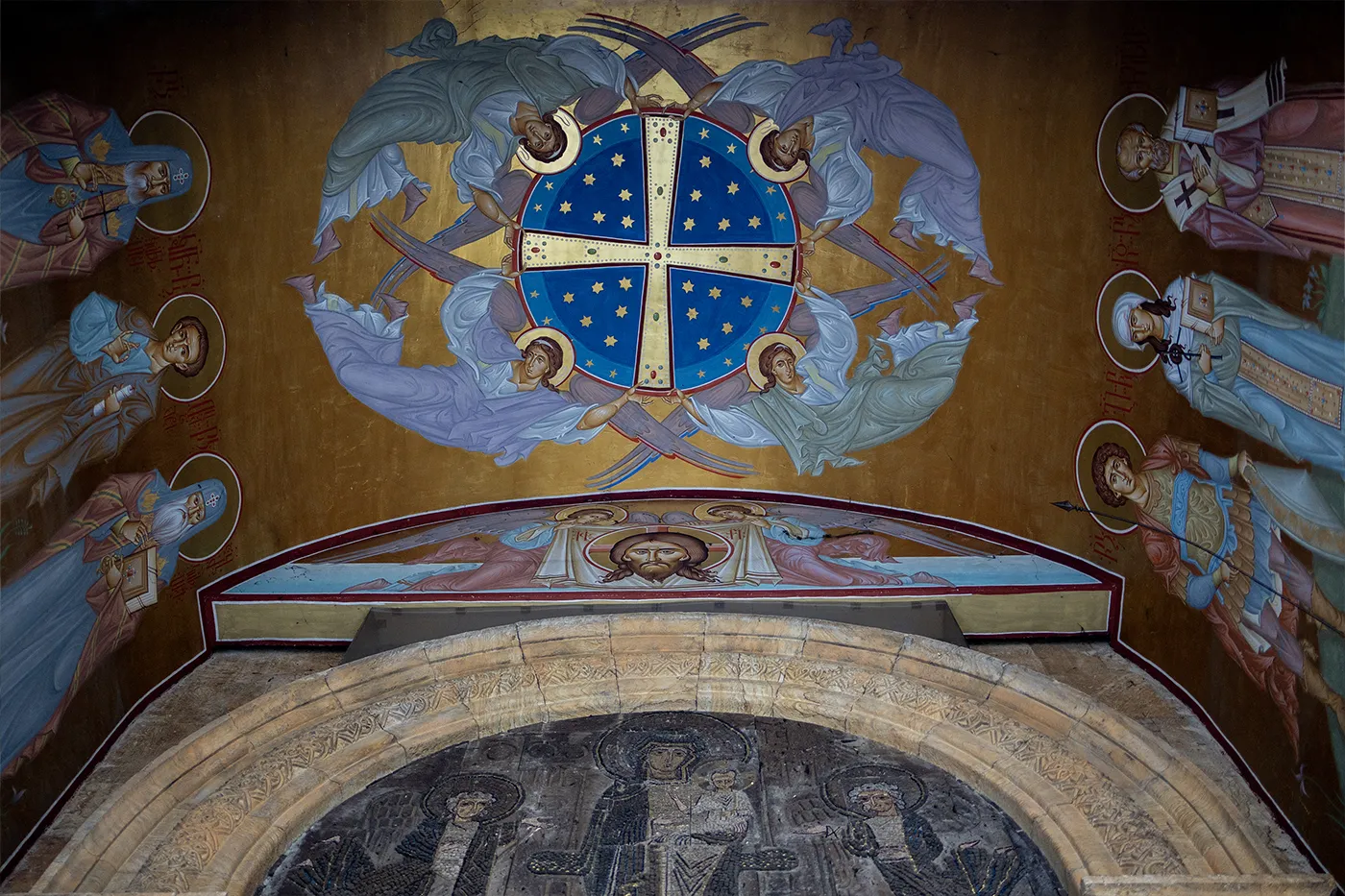
However, we were talking about the Sioni in front of which Dimitri Tumanishvili and his accomplices Jgheriashvili, the tailor Suleiman and the weaver Davita would play cards and, as Kalmasoba tells us, would pretend to be praying instead when observed by the monk Iona. Tumanishvili would say ‘If we take a card with three marks on it, we will imagine the Holy Trinity; when we take one with four, we pray to the Four Apostles.’ And, continuing in this manner, when he reached nine, he would list nine attributes of Christ.
In short, a swindler and a fraudster can say anything. They would strip you of everything, as they did to people passing by Sioni. Even the monk Iona lost his pure gold to them, and they taught him all the card games that existed in Tiflis at the time: Boston, ‘Trilistok’, ‘Svoi Kozir’, ‘Ruchnoi Bank’, ‘Makao’…
I, however, am doing the same now, telling you about Sioni and actually falling into a prophetic trance, praising cards like a gambler.
Text: Abo Yashaghashvili | Photo: Nina Kunchulia | Translation: Alexander Bainbridge