
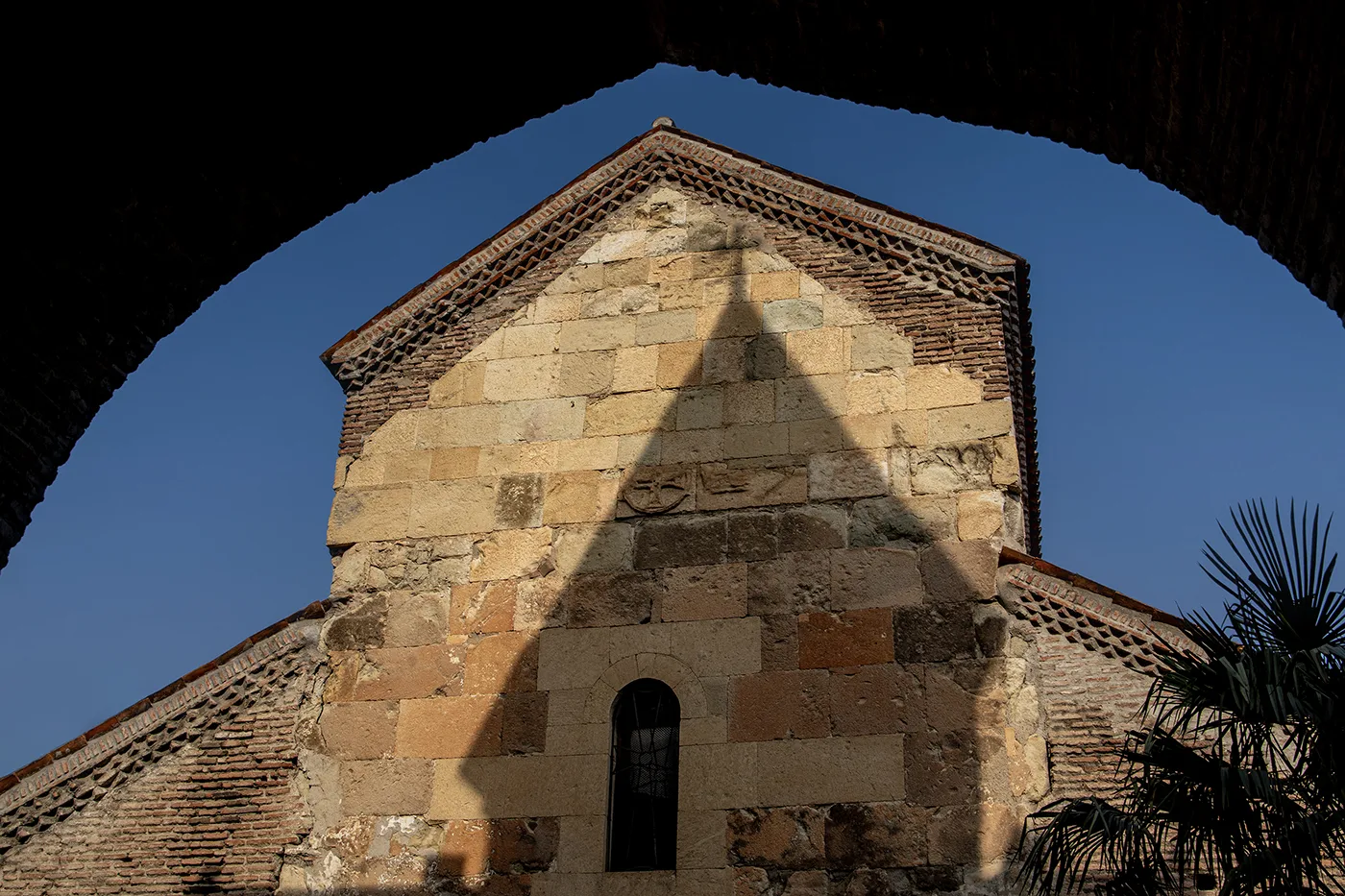
Anchiskhati
A three-nave basilica of the 6th century A.D.
Anchiskhati, as you very well know, is a basilica—a ‘royal stoa’—an architectural invention of Antiquity which was later turned into a church during the Christian era. Christian art very often assimilated forms created during the Antique or pagan eras: crypts were turned into baptisteries, libraries and court buildings into Christian basilicas.
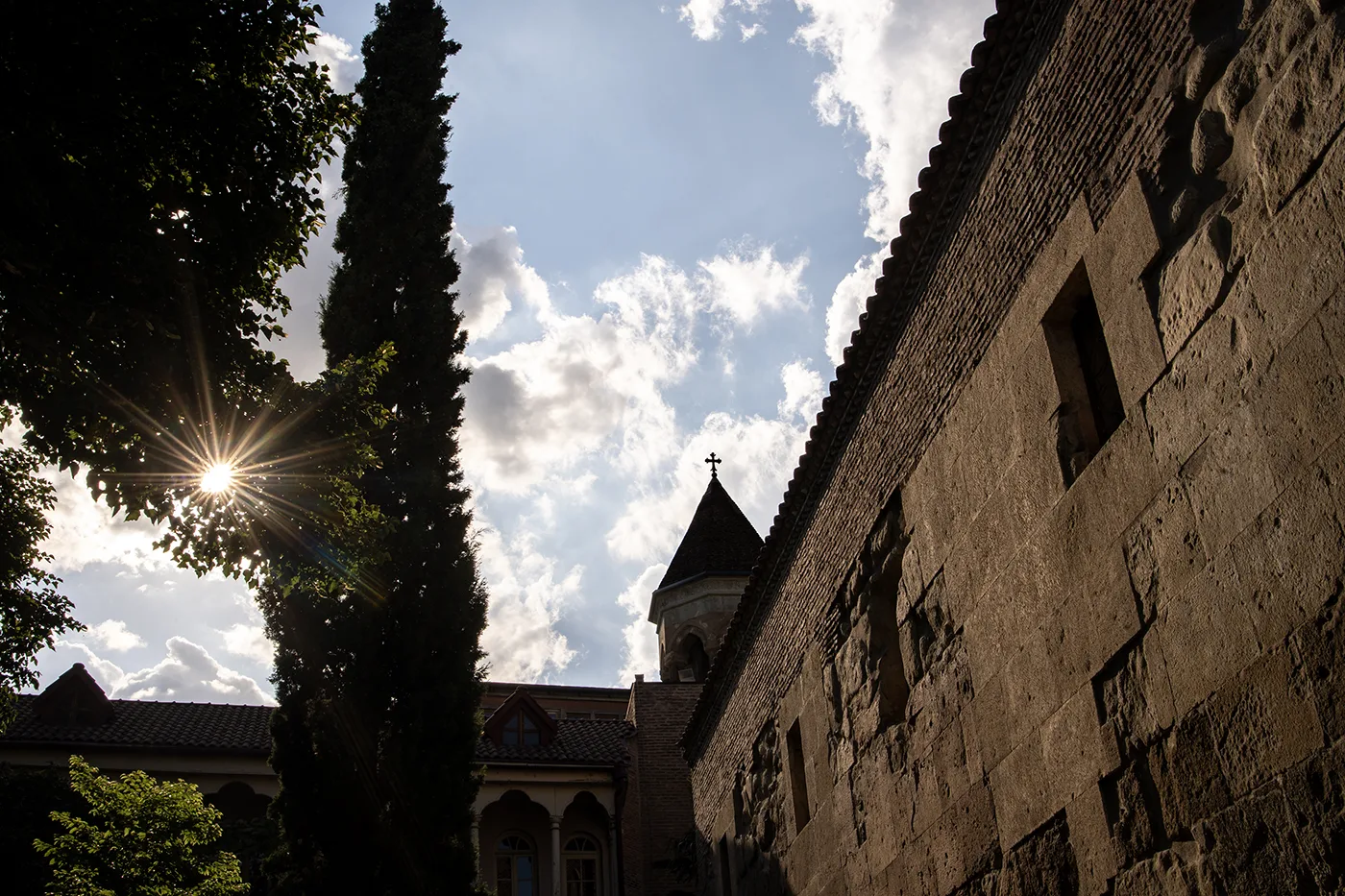
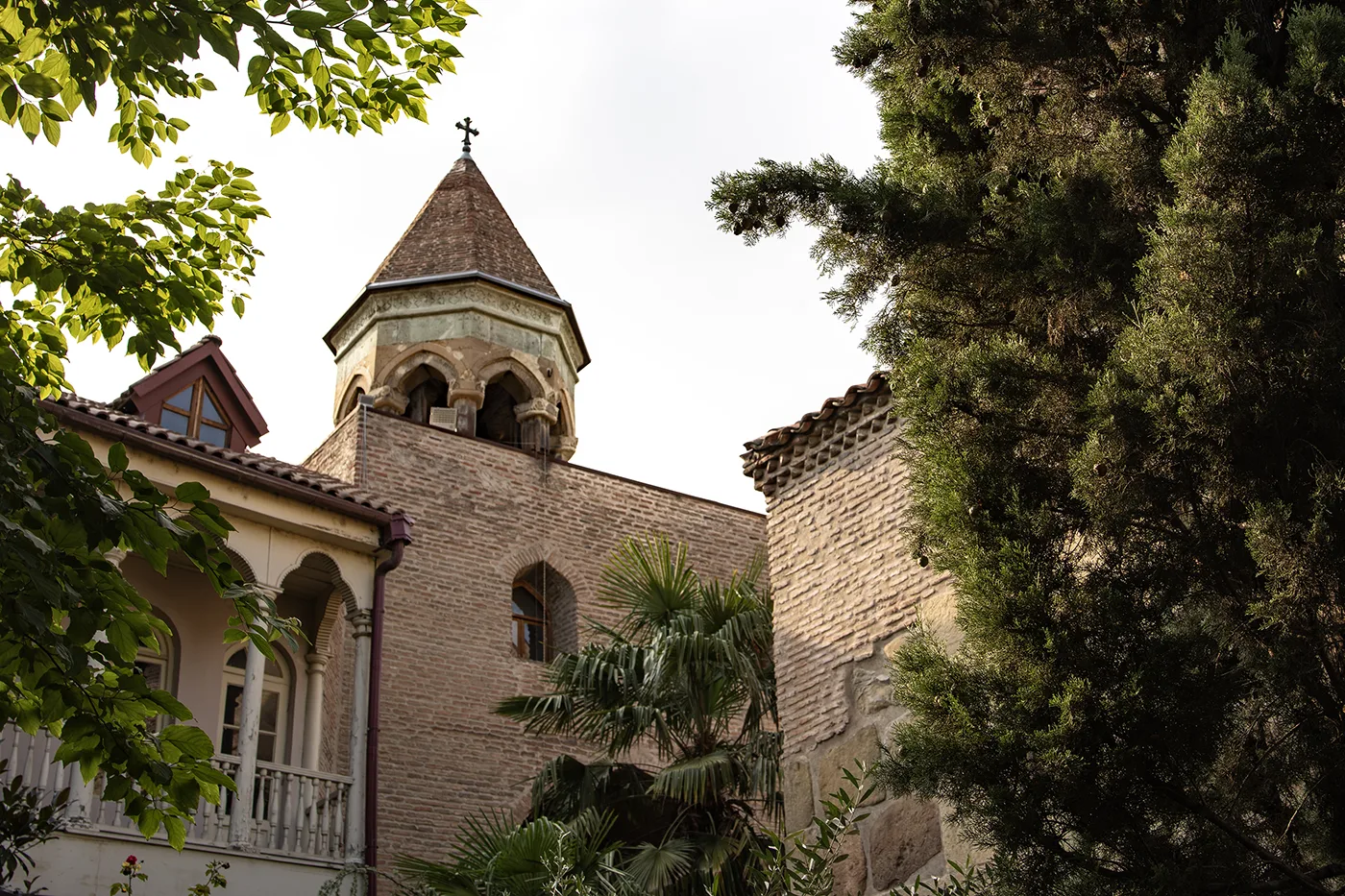
Anchiskhati, which along with Tiflis was built by King Dachi, has seen a lot of history. During Arab rule, it was the only church permitted to ring a bell, and this is why it was also known as the ‘Church of the Bell’. Later, in the 17th century, when Persian art infiltrated everything—be it poetry or painting, clothing, horseshoe arches, brick buildings—a lightweight bell-tower made of bricks was added to it.
At some point, Anchiskhati even had a dome placed on top of it, but this feature did not last long and the basilica soon returned to its original appearance. Later, when the unearthly icon, created by Beka Opizari, was kept in the church, and only the descendants of the king could live nearby, the streets around Anchiskhati had become shelters for various shady people. Next to the basilica, on the banks of the Mtkvari river, naïve passers-by were often lured and robbed of everything before being left tied on the ground, naked, to be discovered by water-carriers on their way to gather a fresh load.
Close by, a notorious bandit had his hiding place, where, like Fagin in London, he gathered small boys and taught them how to steal. They would tie a rope to a cat’s tail before hurling it up towards any clothes drying on a balcony. The cat would hang on to them with its claws, whereupon the thief would pull on the rope and would quickly snatch a shirt—or sometimes a carpet. Who would have got up to see why a cat was meowing late at night?
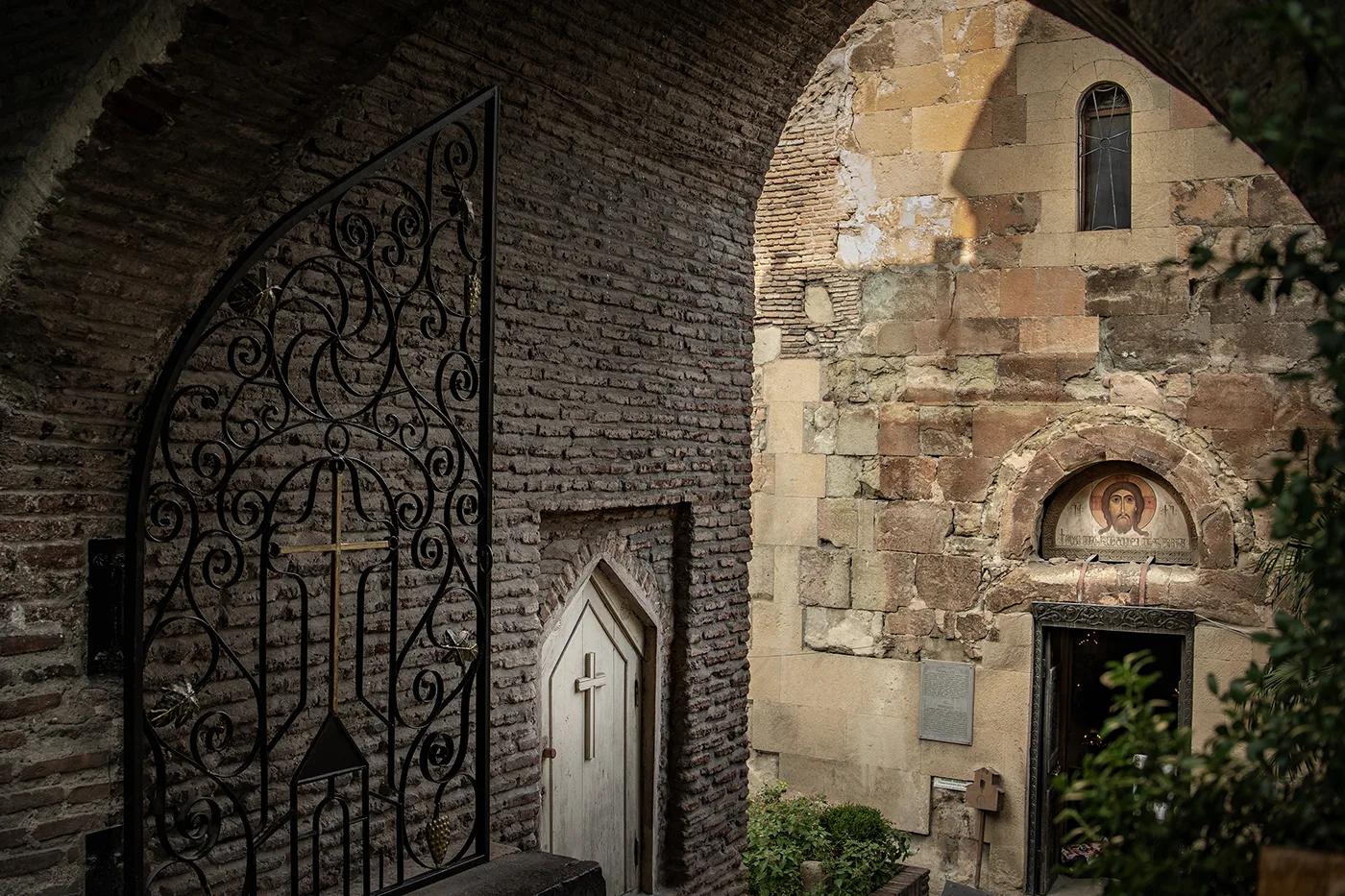
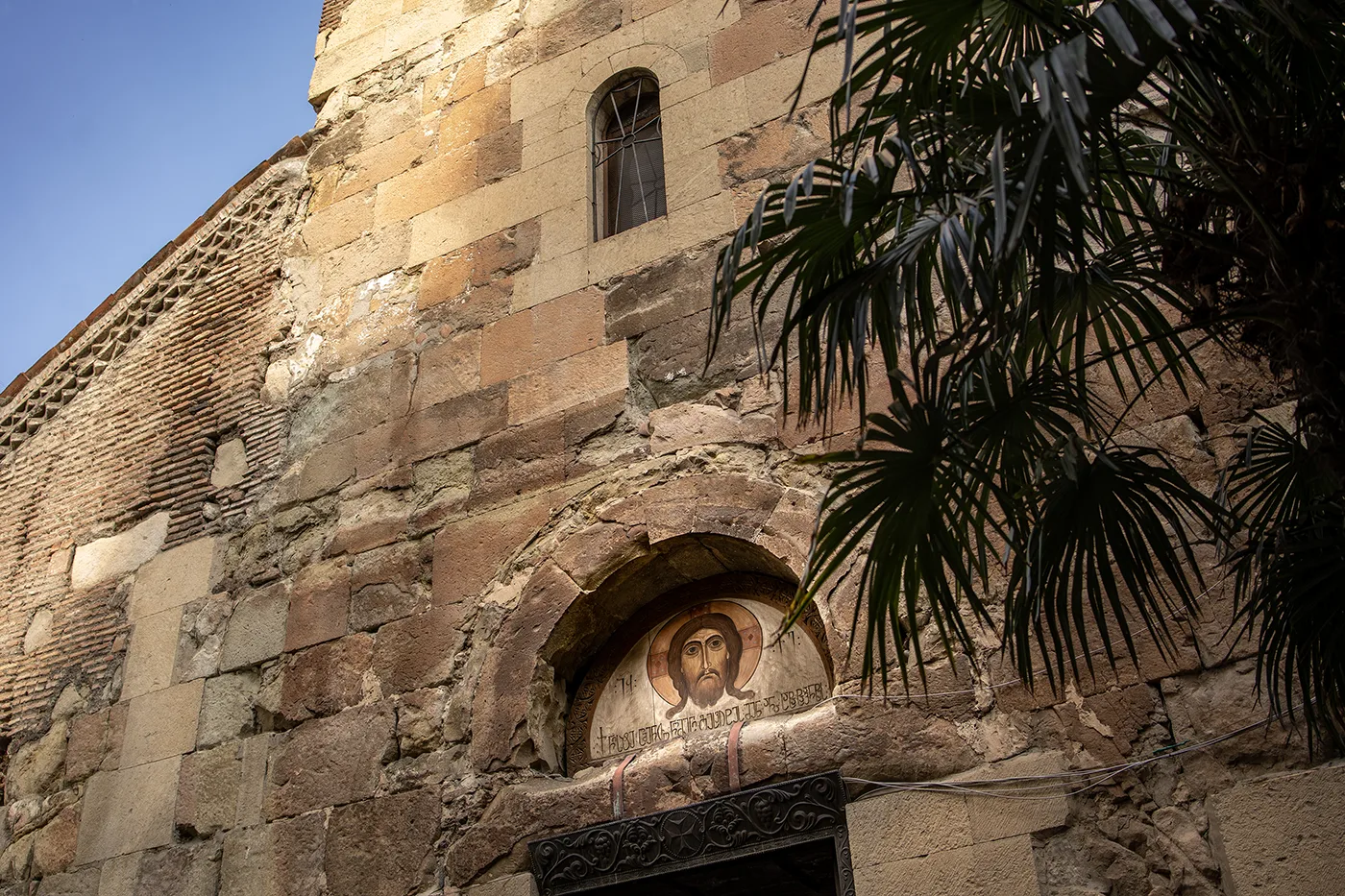
As they passed Anchiskhati on their way through the streets, women would stick a small pebble to its walls. If it remained stuck, then they would have a child. Later, during labour, some would crawl between the legs of a buffalo in the belief that this would make the birth easier. The Surdo stone over here, Efrem Verdi over there, exaltation and magic, were quite common things back then as well. Then it all went to another extreme, when it was said that The Knight in a Panther Skin was a useless book, and books would be gathered across the entire city before being thrown into the Mtkvari river. Legend has it that the river ran blue with ink for several days.
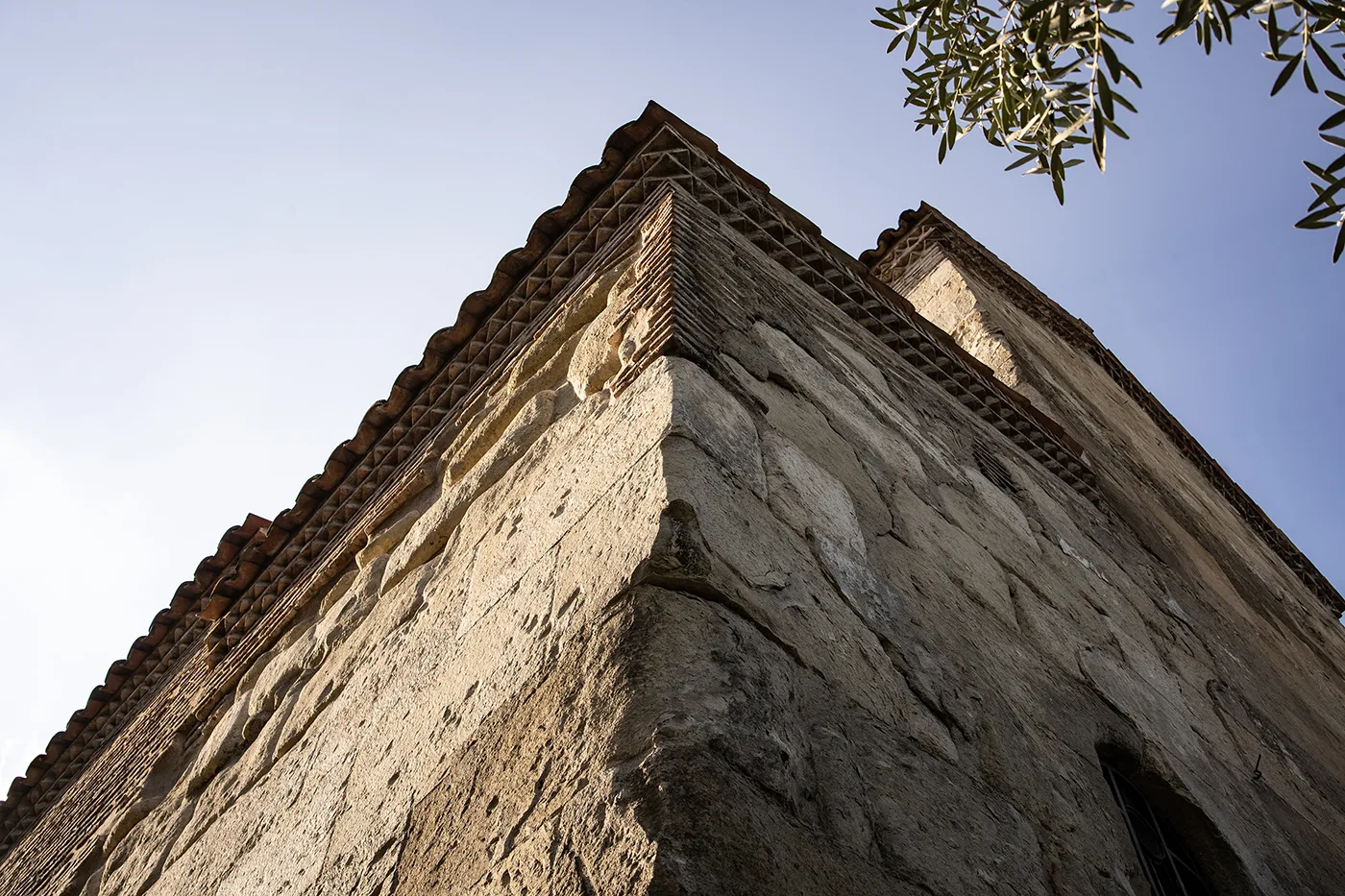
Whereas Anchiskhati remains standing, having witnessed so much, the watcher of outer enemies and inner fools, and, just like Noah’s Ark, ploughing through the waves of centuries.
Text: Abo Yashaghashvili | Photo: Nina Kunchulia | Translation: Alexander Bainbridge